Clearer roles, transparent remuneration and standardised terms: how aviation can improve risk management without diminishing what makes it unique.
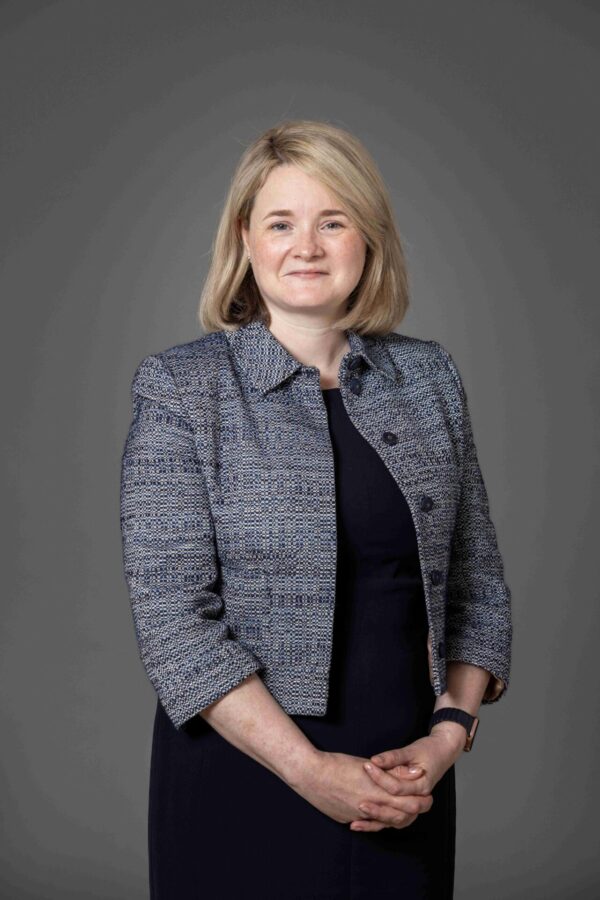
By Melanie Daglish, Director of Aviation, ITIC
As an insurer of shipbrokers and air charter brokers, ITIC is experienced in handling disputes against brokers that arise from a variety of sources. This unique position has allowed ITIC to see that the two sectors handle charter agreements in very different ways, and consequently identify what works best for each approach.
Going back to basics
First, the basics. A broker acts as an intermediary or agent who buys, sells or arranges deals, contracts and agreements on behalf of others, often in return for a commission. In legal terms, a broker is an agent of their principal; they bring their client (the principal) into a contract with another party whilst not taking a position in the contract themselves and therefore bear no liability under it. English agency law states that agents have strict fiduciary duties to their principal and can be liable for damages that arise from (amongst others) breach of duty of care and skill, and for having acted beyond the scope of their authority. An agent can also be held personally liable for damages assumed by third parties that arise from their own negligent or fraudulent acts, errors, or omissions.
The role of the AOC
One key attribute of the aviation sector is regulation, and in this specific context, the role of the AOC. The aviation industry recognises that operational control of the aircraft will always rest with the AOC holder, and that their identity is generally disclosed during charter negotiations and available in the public domain. However, in the shipping sector, there is no equivalent to the AOC. It is common for ITIC to handle claims against shipbrokers by first examining the chartering chain to establish the identities of the ship’s registered owners, beneficial owners, time-charter operator and charterers. As a precursor to considering liability, it must be established that the claimant has the legal standing to bring the claim against the assured.
Charterparty complexities
However, despite their complexity, there are many ways in which the charterparties (the charter agreements used in shipping) help the fixture (the shipping terminology for the charter itself) be more clearly structured. Terms are also more standard across the industry. Shipping has multiple types of charterparty that can be specific to the type of cargo being shipped, the trade route, the basis of charter (time or voyage) and the governing law and jurisdiction. These standard charterparties are used by all shipowners and endorsed as necessary to tailor the agreement to their specific needs. Therefore, there is not the same amount of variation in charterparties as in air charter agreements, where charter terms are often ad-hoc and operator-specific.
The air charter broker often earns a margin, and to allow them to do so, the charter agreements are back-to-back. The air charter broker takes a position in the charter agreement, entering into the agreement with the AOC holder as charterer. Another contract is then drawn up against this with the flying customer.
In the second charter agreement, the air charter broker becomes an indirect air carrier. It is therefore essential that both contracts are placed on at least identical terms; a negligent failure to do so is a source of professional indemnity claims against air charter brokers.
As agents of
Notwithstanding the above, most air charter brokers will still enter into the charter agreements “as agents of” their principal. However, the fact that they will also take a margin on the same charter can be problematic. Under English agency law, an agent has a duty to not make a secret profit. It could be argued that by taking an undisclosed margin, the air charter broker has breached this duty and is therefore liable for any losses that are incurred by their principal as a result. They could also be judged to have taken a position under the charter agreement, despite their attempt to avoid contractual liabilities by signing as agent. In the shipping sector, there will only ever be one charterparty between owners and charterers, and crucially, this will (a) clearly identify the shipbroker as the intermediary, and (b) disclose the amount of commission that they are receiving. It is important to underline that the shipbroking sector is much larger than the air charter broking sector, with a conservative estimated gross transactional value of US$160bn.
In conclusion, whilst the shipping sector lacks the regulatory oversight and operational clarity of aviation, there are things that the air charter industry can learn from its shipbroking counterparts. Shipbrokers’ remuneration practices more closely reflect the traditional agent–principal model that is recognised in agency law, and the standardised charterparty forms encourage consistency. In acknowledging these differences, the air charter sector can find opportunities to improve clarity and risk management whilst maintaining the aspects of the air charter process that make the aviation sector so unique.
Whether you’re an air charter broker, aircraft manager, CAMO, ATO, Part 21-J designer or aerospace consultant, ITIC provides tailored professional indemnity insurance for your unique risk profile. Take a look at the aviation update in ITIC’s 2025 Year Book to find out more: Aviation update – ITIC.
Melanie is ITIC’s Senior Aviation Underwriter, responsible for researching, developing and adapting ITIC’s professional liability insurance to meet the needs of the aviation sector. ITIC is the leading provider of professional indemnity insurance for the transport sector. Melanie has nearly 20 years of experience in professional liability insurance, and she has worked for ITIC for over 13 years. During that time, she has been responsible for looking after clients in the UK, France, Spain and Switzerland, acting as both their underwriter and claims handler. She is a regular delegate at aviation industry events and looks forward to attending MACE.